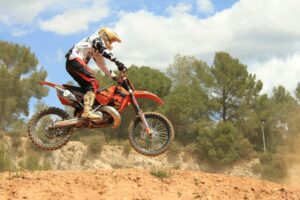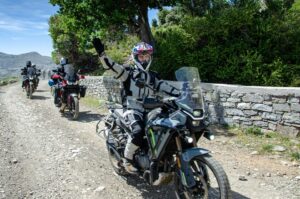
Of all the skills you’ll develop as an off-road rider, learning to brake effectively on loose terrain is one of the most transformative. Whether you’re tackling gravel tracks, sandy trails, or a muddy forest path, the way you apply your brakes on an unpredictable surface can mean the difference between a smooth exit and an unexpected slide. Master this, and your confidence on the bike will grow considerably.
Why Loose Terrain Changes Everything
On a hard, grippy surface, your tyres can generate reliable friction, making it relatively easy to scrub off speed. Loose terrain — sand, gravel, dirt, or mud — behaves very differently. The surface shifts under load, traction comes and goes in an instant, and the wheels can lock up far more easily than you might expect. Understanding this is the first step to riding it well.
The key principle is simple: on loose terrain, gentle and progressive braking beats aggressive, last-second inputs every time.
Front Brake vs Rear Brake: Getting the Balance Right
Many riders arriving from road riding instinctively favour the front brake — and on a sealed road, that instinct is mostly correct. Off-road, the balance shifts. The front brake still provides the majority of your stopping power, but applying it too hard on a loose surface risks washing out the front wheel, which is difficult to recover from.
The rear brake becomes your best friend in the dirt. It allows you to scrub speed more gradually and, crucially, a rear-wheel slide is far more controllable than a front-wheel washout. Practise using a firm, steady rear brake input combined with light, progressive front brake application. Over time, you’ll develop the feel for how much bite each surface will allow.
Body Position While Braking
Good body position underpins everything in off-road riding, and braking is no exception. As you brake, your weight naturally wants to shift forward over the front of the bike. To counteract this, push back slightly on the footpegs, grip with your knees, and keep your elbows up and out. This posture helps maintain rear-wheel traction and keeps you in control of the bike rather than at its mercy.
Standing on the pegs while trail braking also gives you a lower centre of gravity and more flexibility to absorb unexpected bumps — both of which matter greatly when the ground beneath you is shifting.
Reading the Surface Before You Brake
Skilled off-road riders are always scanning ahead, and this habit pays dividends at the braking point. Look for clues about the surface: a change in colour often signals different composition, tyre tracks can reveal how loose or compact the ground is, and scattered rocks suggest the potential for your tyre to deflect unexpectedly.
Begin your braking earlier than you think necessary. This gives you more room to apply light, progressive pressure rather than snatching at the brakes at the last moment. The further ahead you plan, the smoother — and safer — your riding becomes.
Practising Controlled Braking Drills
Like all riding skills, braking on loose terrain improves with deliberate practice. Find a safe, open area of loose ground and set yourself a simple exercise: ride at a moderate speed, pick a marker, and focus purely on braking as smoothly as possible while keeping the bike upright and pointing straight. Vary the surface, the entry speed, and the braking point. Pay attention to the feedback coming through your hands and feet.
As you grow more comfortable, you can introduce gentle trail braking into corners — carrying light brake pressure as you arc through a bend — to experience how speed and direction can be managed simultaneously.
Developing genuine confidence on loose terrain takes time, but with the right coaching and structured practice, progress comes quickly. At 2020 Racing Academy, we guide riders of all abilities through the technical skills that make off-road riding safer and more rewarding. Ready to take the next step? View our programmes and find the course that suits you.