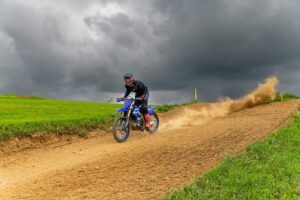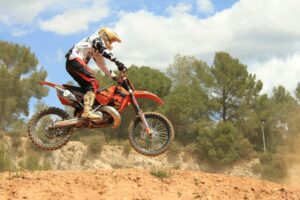
If there’s one thing that separates a confident off-road rider from a nervous one, it’s body position. Get it right and your bike feels like an extension of your body — responsive, planted, and predictable. Get it wrong and even a gentle trail can feel out of control. The good news? With a few key techniques, you can transform your riding almost immediately.
Why Body Position Matters More Off-Road
On the road, you mostly sit and steer. Off-road, your body becomes an active part of the suspension system. Loose dirt, roots, rocks, and ruts all shift the bike’s balance constantly — and it’s your body that compensates. Mastering where you put your weight, how you grip, and how you hold your arms and legs is the foundation every other skill is built on.
Stand Up — More Than You Think
Standing on the pegs is the default off-road riding position, not the exception. When you stand, your legs act as shock absorbers, your weight drops lower through the pegs, and you gain a much better view of the trail ahead. Start by practising on flat, easy terrain: stand up, bend your knees slightly, and keep your weight centred over the footpegs. It will feel awkward at first — that’s completely normal. Stick with it and it quickly becomes second nature.
A simple cue: imagine you’re standing on a moving bus. Soft knees, relaxed grip, eyes up. That’s the feeling you’re after.
Grip With Your Knees, Not Your Hands
One of the most common beginner mistakes is gripping the handlebars too tightly. A death-grip on the bars transfers every bump and vibration straight to your shoulders — and it actually makes the bike harder to control. Instead, let your knees and thighs grip the tank or shrouds lightly. Your hands should guide, not clamp. Think of the bars like you’d hold a bird: firm enough to stay in control, light enough not to crush it.
Relaxed hands also mean better feel for the front wheel, which is critical when picking lines through technical terrain.
Centre Your Weight Over the Pegs
Your footpegs are the bike’s balance point. When you’re riding on flat ground, your weight should be directly over them — not leaning back toward the seat, and not hanging forward over the front wheel. Many newer riders sit too far back, which unweights the front tyre and makes steering vague and slow.
A useful drill: while riding slowly in a straight line, hover your backside just above the seat without sitting down. You’ll immediately feel your weight shift to the pegs where it belongs.
Look Further Ahead Than You Think
Your body follows your eyes. If you stare at the obstacle right in front of your wheel, you’ll tense up and react too late. Train yourself to look at least three to five seconds ahead on the trail — to where you want to go, not what you’re trying to avoid. This keeps your upper body relaxed, your line choices smoother, and your reactions more flowing rather than jerky.
Elbows Up, Shoulders Relaxed
Keeping your elbows raised slightly (think “chicken wings”) opens up your chest, keeps your steering light, and stops you from locking your arms straight. Locked-out arms transmit shocks directly to your upper body and reduce your ability to absorb impacts. Combine this with a slight bend at the waist and you’ll have an athletic, balanced stance that can handle whatever the trail throws at you.
Put It All Together on Your Next Ride
Don’t try to fix everything at once. Pick one element — standing on the pegs, say — and focus on it for ten minutes before moving to the next. Gradual, deliberate practice is far more effective than trying to overhaul your entire position in a single session.
If you want structured, hands-on coaching to build these foundations fast, our beginner off-road courses at 2020 Racing Academy are designed exactly for this. You’ll get personalised feedback on your body position from experienced instructors in a safe, supportive environment. Find out more about our training programmes here — we’d love to see you on the dirt.