Most riders focus on technique—and rightly so—but even the best skills can’t fully compensate for a poorly set-up motorcycle. If your suspension is too stiff, you’ll get bounced off-line on rocky sections. Too soft, and the bike will wallow and feel unpredictable mid-corner. Getting your suspension dialed in for trail riding doesn’t require a mechanic’s degree—just a basic understanding of a few key adjustments and the patience to fine-tune them.
Why Suspension Setup Matters on the Trail
Off-road terrain is unpredictable by nature. Roots, rocks, ruts, and soft soil all demand that your suspension absorbs impacts quickly and recovers just as fast. A trail-specific setup differs significantly from motocross settings—trails tend to reward a slightly softer, more compliant feel that keeps your wheels tracking the ground rather than skipping over it. A properly set-up bike is not only faster—it’s dramatically more comfortable and confidence-inspiring.
Start With Sag
Sag is the single most important suspension measurement, and it’s the best place to start. Race sag (also called rider sag) is how much your rear suspension compresses under your weight in full riding gear. For most trail riding, you’re aiming for around 95–105mm of rear sag. Too much sag means the spring is too soft or the preload is insufficient; too little means the spring is too stiff or over-preloaded. Setting sag correctly balances the bike’s geometry and affects how it corners, climbs, and descends. Most bikes allow you to adjust rear preload with a spanner wrench—it’s a five-minute job that makes a world of difference.
Understanding Compression and Rebound Damping
Once sag is set, you can fine-tune your compression and rebound damping. Compression damping controls how fast the suspension compresses when it hits a bump. Rebound damping controls how fast it extends back out. For trail riding, it’s generally better to err on the side of slightly less compression damping so the suspension can absorb sharp hits quickly. Rebound that’s too fast causes the bike to “pack up” over successive bumps; too slow and it stays compressed, making the bike feel sluggish. Start from your manufacturer’s recommended baseline settings and adjust one click at a time—small changes have big effects.
Front Fork Setup for Trail Riding
Your front forks deserve the same attention as the rear. Fork sag (sometimes called free sag or static sag) should typically be around 30–40mm for trail use. Check that the forks are level and that both legs are set identically—asymmetric setup is a common source of mysterious handling quirks. If your front end feels harsh over sharp rocks, try backing off the compression damping one or two clicks. If the bike dives aggressively under braking, a click or two more of compression or a slightly higher fork oil level can help.
Test, Ride, Repeat
The only way to truly dial in your suspension is to ride, feel, and adjust. After each change, head out on a familiar stretch of trail and pay attention to how the bike reacts to specific features—a rocky step-up, a rutted corner, a hardpack straight. Take notes if you can. Suspension tuning is an iterative process, and even professional riders tweak their settings from track to track and conditions to conditions. Don’t be discouraged if it takes a few sessions to find your sweet spot—the payoff in control and confidence is absolutely worth it.
Ready to take your off-road riding to the next level? The right technique and a well-set-up bike go hand in hand. At 2020 Racing Academy, our coaches help riders of all skill levels improve both—on and off the bike. View our programs and find out how we can help you ride faster, safer, and with more confidence on any terrain.
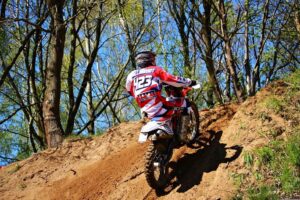
Image by Hemant Dalvi from Pixabay