Few moments in off-road riding match the rush of cresting a steep hill on a dirt bike—but that same hill can quickly turn from exhilarating to terrifying if your technique is off. Whether you’re tackling a gentle incline for the first time or eyeing a gnarly descent on a technical trail, mastering hill riding is a skill that pays dividends every time you ride. Here’s what you need to know to climb with confidence and descend with control.
Weight Distribution Is Everything
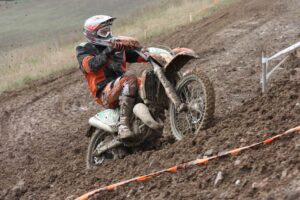
The golden rule for hills: shift your weight opposite to the slope. When climbing, move your body weight forward over the front wheel. Crouch low, keep your elbows up, and get your chest close to the handlebars. This prevents the front wheel from lifting and keeps traction where you need it. On descents, do the opposite—shift your weight back over the rear wheel to keep the front end from tucking and to maintain steering control. Standing on the pegs throughout makes it far easier to move your weight dynamically as the terrain changes.
Throttle Control on the Way Up
Smooth, committed throttle is your best friend on a climb. Hesitation mid-hill is one of the most dangerous mistakes a rider can make—if you stall or lose momentum, you’re suddenly fighting to keep a heavy bike from rolling backward down a steep slope. Pick your line before you begin the climb, then apply steady throttle and trust the bike to do its job. Avoid stabbing the throttle, which spins the rear wheel and kills traction. Think of it as feeding power progressively—just enough to maintain momentum without breaking loose.
Choosing the Right Gear
Gear selection can make or break a hill climb. Too high a gear and the engine lugs; too low and you’re revving out with nowhere to go. As a general rule, drop a gear before you start the climb rather than mid-way up. You want the engine in its power band—pulling strongly without screaming. On long, gradual hills you may be able to hold a higher gear, but for steep or technical climbs, a lower gear gives you the torque and control you need. If you feel the bike start to bog, a quick downshift can save the run.
Descending Under Control
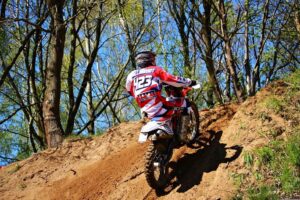
Descents demand patience and a light touch on the brakes. Use both brakes together, but favor the rear to avoid diving the front into the dirt. Squeeze the brakes gently rather than grabbing them—locked wheels on a descent are a fast track to a crash. Keep your weight back, look ahead at where you’re going, and let the bike find its footing. On very steep descents, consider putting your feet out slightly in front of the footpegs so you can brace if needed. Stay relaxed; tension in your arms transfers directly to the bars and reduces control.
What to Do If It Goes Wrong
Even experienced riders sometimes find themselves in trouble on a hill. If you stall mid-climb and start rolling backward, don’t panic. Apply both brakes firmly, keep your feet out to stabilize the bike, and either restart quickly or walk the bike back down using engine compression. If you’re heading down a slope faster than you’d like, resist the urge to grab a fistful of front brake—stay smooth, stay back, and use the rear brake to scrub speed gradually.
Hills are one of the most rewarding challenges in off-road riding, and the right coaching makes a huge difference in how quickly you progress. At 2020 Racing Academy, our instructors work with riders at every level to build the skills and confidence needed to tackle technical terrain safely. Ready to take the next step? View our programs and find the training that’s right for you.